
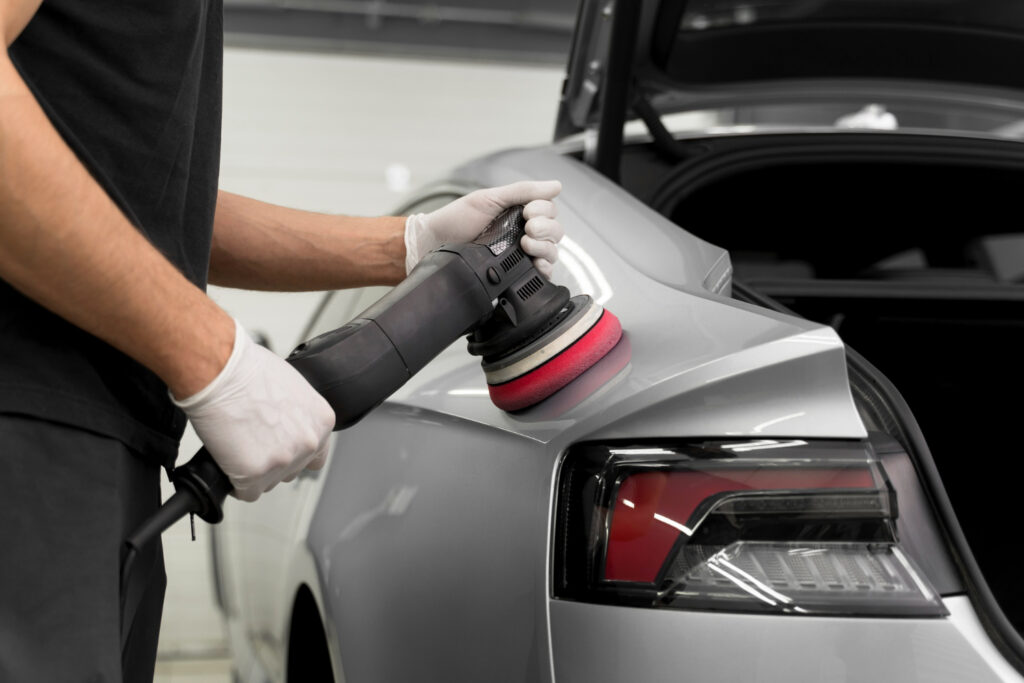
Signs Your Car Is Ready for Paint Correction and Ceramic Coating
At some point, regular washing and basic waxing are no longer enough to keep your vehicle looking sharp. If you’re starting to notice that your paint doesn’t pop like it used to, or that swirls and light scratches show up in the sun, your car may be ready for paint correction and possibly a ceramic coating.
This guide explains how to tell when your vehicle has moved beyond simple maintenance & when it’s time to consider professional-level correction and protection, like paint correction and long-term ceramic coating commonly offered by advanced auto detailing and mobile detailing services.
1. Your Paint Looks Dull, Even After Washing
If you’ve washed and dried your vehicle properly, maybe even used a spray wax, but the paint still looks flat or hazy, that’s a classic sign of:
- Oxidation in the clear coat
- Built-up micro-scratches and swirls
- Contamination embedded in the paint
At this stage, normal washing and basic hand waxing aren’t enough. The clear coat needs to be polished and corrected to restore depth and clarity. This is where paint correction often performed during high level auto detailing or mobile auto spa services comes in.
2. Swirl Marks Are Visible in Direct Sunlight
Take your car into the sun or under bright parking lot lights and look at the reflections on the paint. If you see circular cobweb patterns, those are swirl marks.
Common causes:
- Drive-through car washes with brushes
- Dirty wash mitts or towels
- Improper drying techniques
Swirl marks sit in the clear coat and scatter light, making your car look older than it is. Light to moderate swirls are usually treatable with paint correction (a lighter polishing process), while heavier defects may require a multistage paint correction.
If you see swirls everywhere hood, roof, doors, etc…it’s a strong sign your car is ready for proper paint correction detailing.
3. Light Scratches You Can Feel but Not Deeply Catch
Not every scratch needs a respray. A quick test:
- Run your fingernail gently across the scratch.
- If your nail slightly catches but the scratch isn’t white or through to primer, it may be correctable.
- If your nail catches hard and the scratch is very sharp or you see a different color underneath, that may be too deep for polishing alone.
Correctable defects include:
- Light parking lot scuffs
- Minor brush marks from bushes
- Marks from improper washing
These are prime candidates for machine polishing as part of a paint correction service.
4. The Paint Feels Rough, Even After Washing
After a wash, run your hand gently over the paint (use a plastic bag over your hand to amplify the feeling). If it feels rough or gritty, that means:
- Iron particles (from brake dust and roads)
- Environmental fallout
- Tar, sap, or industrial contamination
These issues usually require:
- Iron removal (chemical decontamination)
- Clay bar treatment (mechanical decontamination)
Decontamination is a critical first step before any paint correction or ceramic coating. If you skip it, you risk polishing contaminants into the paint instead of removing them.
If your car never feels smooth as glass even after you wash it, it’s ready for a proper decon + paint correction process.
5. Water No Longer Beads or Sheets Off the Surface
On a well maintained surface (fresh wax, sealant, or ceramic coating), water should bead up or sheet off easily. If you notice:
- Water sticking to the panels
- Large, flat puddles instead of tight beads
- Slow runoff even after a wash
Then your existing protection is either clogged or worn away.
At this stage, many owners consider:
- Paint correction to renew clarity
- Followed by a ceramic coating for long-term protection
This combo is common in higher-end auto detailing and mobile detailing packages, especially for drivers who want less frequent waxing and easier maintenance.
6. You’re Constantly Fighting Bug Etching, Bird Droppings, or Water Spots
If you notice:
- Stains or shadow marks that remain after washing
- Etching where bird droppings or bug splatter sat too long
- Persistent water spots from sprinklers or hard water
These can sit in or on top of your clear coat and dull the finish. Light etching can sometimes be corrected with polishing; more severe cases need multi-stage paint correction.
Once corrected, a ceramic coating can help resist future etching by providing a sacrificial barrier. It doesn’t make the car invincible, but it buys you more time to clean off contaminants before they damage the clear coat again.
7. You Want Easier Maintenance and Less Frequent Waxing
Even if your paint isn’t severely damaged, you might be tired of:
- Waxing every month or two
- Spending extra time trying to keep the car glossy
- Watching traditional wax protection fail after a few washes
In that case, a light paint correction to refine the surface, followed by a ceramic coating, is a logical next step. Many mobile detailing professionals structure their ceramic coating services this way: correct the paint, then lock in that finish.
For daily drivers in places like Plano, Frisco, Allen, and Dallas, this is one of the most popular long-term auto detailing strategies.
8. You’re Seeing Mismatched Panels or Old Buffer Trails
If your vehicle has had prior work like dealership buff jobs or quick, cheap details you may see:
- Hazy panels that don’t match the rest of the car
- Circular “holograms” left by rotary buffers
- Patches that look cloudy in certain lighting
These are signs that someone used the wrong pad, machine, or compound and didn’t properly finish the polishing process. Correcting this requires careful, methodical paint correction often stepping through multiple polishing stages.
If your paint looks worse after it was “buffed,” it’s almost certainly ready for a proper correction.
When Is Ceramic Coating the Right Next Step?
Your car is usually a good candidate for ceramic coating if:
- You’ve corrected or minimized defects with paint correction
- You want long-term protection that outlasts wax or sealants
- You’re willing to maintain it with proper hand washing
- You live in a climate like North Texas with strong sun, heat, and road grime
Common reasons people move from basic detailing to ceramic coating include:
- Desire for easier washing and drying
- Protection from UV, bird droppings, bug splatter, and chemicals
- Long-term shine without constant reapplication
Ceramic coating works best on a properly corrected and decontaminated surface. Applying it over swirls, oxidation, or contaminants just locks in the problems.
Summary: Key Signs Your Car Is Ready for Correction & Coating
Your vehicle may be ready for paint correction and ceramic coating if:
- The paint looks dull even after washing
- Swirl marks are obvious in sunlight or under bright lights
- You feel roughness or grittiness on the paint after washing
- Water no longer beads or sheets off the surface
- You have light scratches your fingernail doesn’t deeply catch
- You battle recurring etching or water spots
- You’re ready for easier maintenance and longer-lasting protection
Understanding these signs helps you decide when basic washing and waxing isn’t enough, and when it’s time to move into the world of true paint correction and long-term ceramic protection the same foundation used by advanced auto detailing and mobile detailing professionals.